
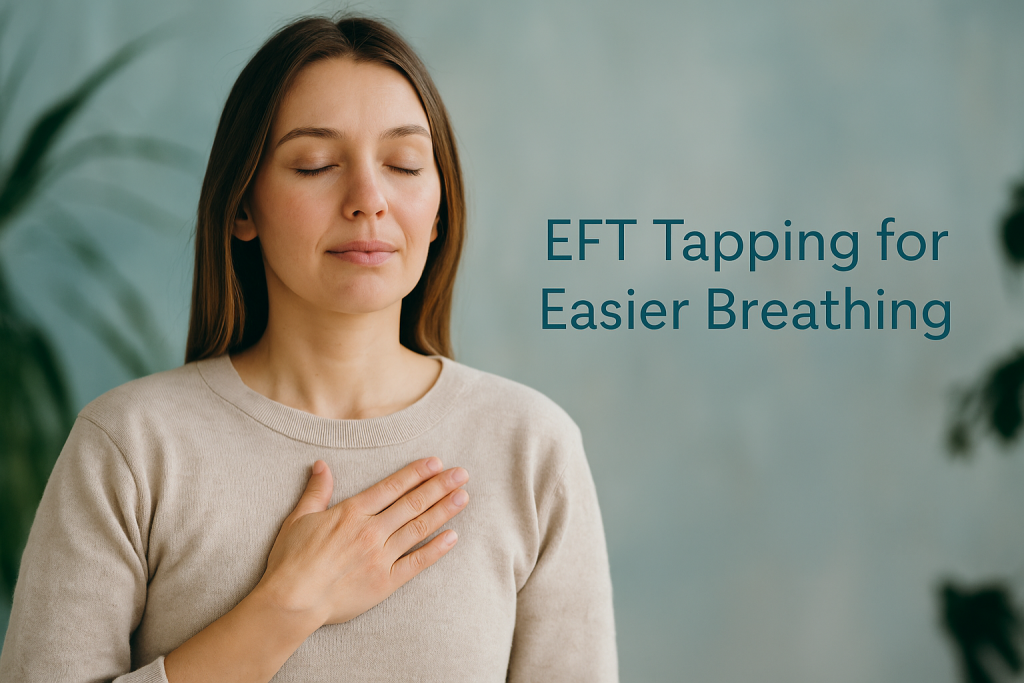
EFT Tapping for Constricted Breathing: How to Breathe Easier with This Simple Technique
Do you ever feel like you cannot quite catch your breath?
Whether it is due to asthma, anxiety, post-COVID recovery, lung issues, or simply the effects of stress, feeling your breath tighten can be frightening and exhausting.
One of the most effective tools I use for myself and with clients is called the Constricted Breathing Technique, developed by Gary Craig, founder of EFT (Emotional Freedom Techniques). It is a gentle tapping sequence that helps release both physical and emotional tension connected to your breathing. Many people notice that within minutes, their breath feels deeper, calmer, and easier.
Why Breathing Feels Constricted
Breath can feel restricted for many reasons:
- Stress and anxiety – when we are anxious, our body shifts into fight-or-flight mode, making the breath shallow and tight.
- Asthma or lung problems – inflammation and constriction can make it hard to take in a full breath.
- Post-COVID recovery – many people find their lungs feel weaker, tighter, or less flexible after illness.
- Everyday tension – even poor posture or holding emotional stress can limit the breath.
EFT Tapping works by gently calming the nervous system and reducing the emotional load that can amplify these sensations. When the mind relaxes, the body often follows.
How to Do the Constricted Breathing Tapping Technique
This process only takes a few minutes. Follow along, and notice how your breath changes.
Step 1: Notice Your Breath
Take a normal breath in and out. Do not force it—just notice how deep it feels.
On a scale of 0–10, where 0 = cannot breathe at all / very tight and 10 = completely open and free, rate your starting breath.
Step 2: Setup Statement
While tapping gently on the side of your hand (karate chop point), repeat these phrases:
- “Even though my breath feels constricted, I accept myself and how I feel.”
- “Even though it feels hard to take a full, easy breath, I deeply and completely accept myself.”
- “Even though I notice this tightness, I choose to relax and allow a little more space.”
Step 3: Tapping Sequence
Tap gently on each point while repeating a reminder phrase:
- Eyebrow: “This restricted breathing.”
- Side of Eye: “This tightness in my chest.”
- Under Eye: “This constricted breath.”
- Under Nose: “This tightness when I breathe.”
- Chin: “All this tension in my breath.”
- Collarbone: “This limited breathing.”
- Under Arm: “This constricted feeling.”
- Top of Head: “This tightness in my breath.”
Step 4: Check In
Pause. Take a gentle breath again. Notice if it feels easier, deeper, or lighter.
Rate it again on your 0–10 scale. Has it shifted?
Step 5: Positive Round (if needed)
If your breath still feels a little tight, tap another round with positive, calming phrases:
- Eyebrow: “Remaining tightness in my breath.”
- Side of Eye: “This leftover restriction.”
- Under Eye: “Maybe I could release some of it.”
- Under Nose: “Allowing my lungs to open a little.”
- Chin: “Breathing with more ease.”
- Collarbone: “I give myself permission to breathe freely.”
- Under Arm: “Letting my body relax with each breath.”
- Top of Head: “I welcome a freer, fuller breath.”
Why This Works
EFT Tapping combines gentle acupressure with mindful awareness of emotions. Many people hold fear, stress, or past trauma in the chest, which can literally feel like a weight on the lungs. By calming both body and mind, tapping helps restore the natural flow of breath.
Research has shown EFT to be effective for reducing stress, anxiety, and physical symptoms. While it is not a replacement for medical treatment (especially for asthma, COPD, or post-COVID complications), it can be a powerful self-care tool alongside professional support.
Try This Anytime You Feel Tight or Breathless
The Constricted Breathing Technique is quick, simple, and safe. You can use it:
- When you feel anxious or panicky
- If your asthma or lungs feel tight (always alongside your medical care)
- To support post-COVID recovery
- When stress makes you hold your breath or breathe shallowly
Even one or two minutes of tapping can make a noticeable difference.
Final Thought
Your breath is life. By bringing awareness and compassion to it, you give your body permission to soften and heal.
Next time your breath feels stuck, try EFT tapping—and notice how much lighter you feel.
✨ If you found this helpful, share this post with someone who struggles with asthma, post-COVID breathlessness, or stress. Breathing freely is one of the simplest gifts of healing we can give ourselves.
Frequently Asked Questions about EFT Tapping and Breathing
❓ Can EFT tapping replace my inhaler or medical treatment?
No. EFT is a supportive self-care tool, not a substitute for prescribed medication. Always continue your doctor’s treatment plan, especially for conditions like asthma or COPD.
❓ How often should I use the Constricted Breathing Technique?
You can tap any time you feel your breath is tight or shallow. Many people also use it daily as a preventative calming practice.
❓ Will tapping help with post-COVID breathlessness?
Many people report feeling relief and a sense of calm when using EFT for post-COVID recovery. While it cannot cure lung damage, it can help reduce anxiety and tension that make breathing harder.
❓ Can children use this tapping technique?
Yes, with gentle guidance. Many children find it calming, especially if stress or worry affects their breathing. Keep it simple and playful.
❓ How quickly does it work?
Often within minutes. Some people feel a noticeable difference after one round, while others may need a few sessions to feel more ease in their breath.
✨ Remember: EFT tapping is about giving your body and mind permission to relax. Even if your breath only improves slightly, it is still progress—and often, each round builds on the last.